
Can you leave a cat alone for a day? Yes, most adult cats can be left alone for up to 24 hours if they have access to fresh food, water, and clean litter boxes. However, the ideal cat alone duration depends on several factors. This guide explores the nuances of leaving your feline friend solo, from short errands to longer trips, ensuring their well-being and safety.
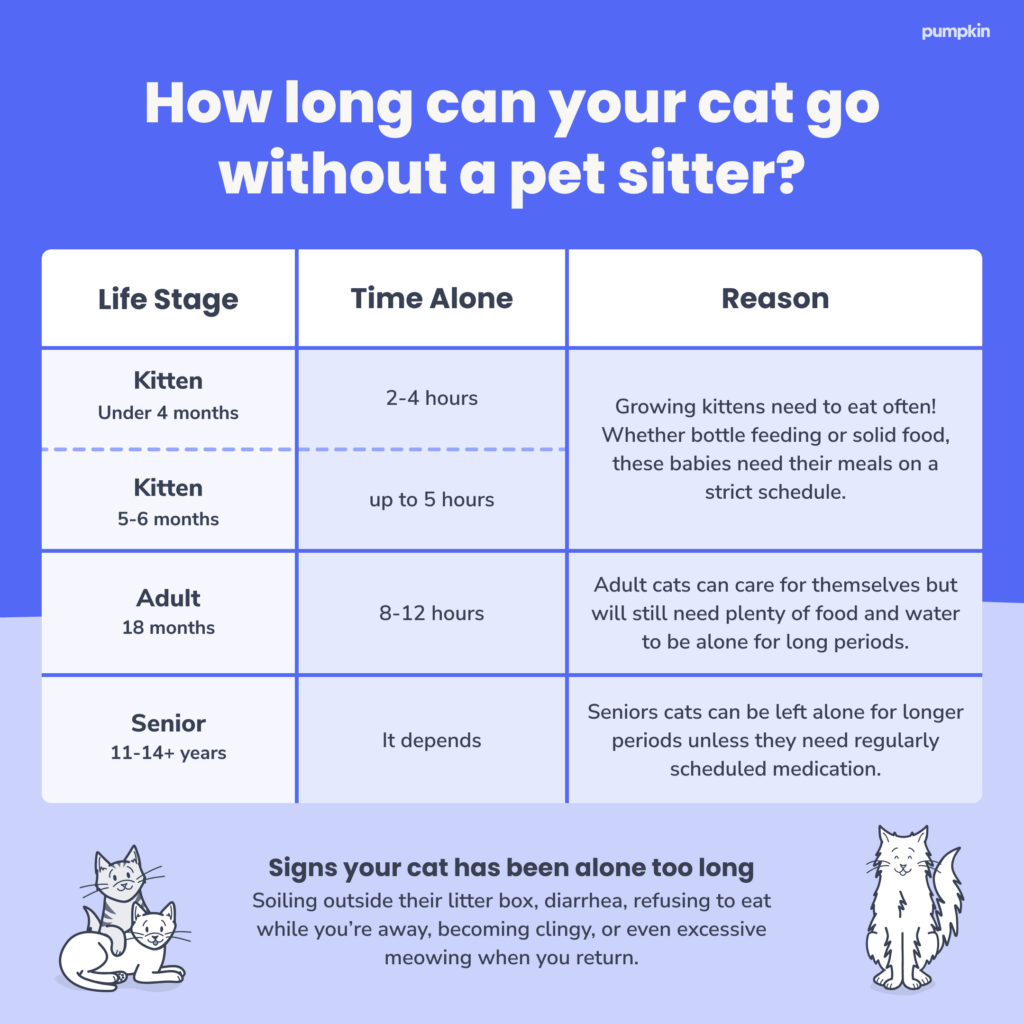
Image Source: www.pumpkin.care
Factors Influencing How Long Your Cat Can Be Left Alone
Leaving a cat alone requires careful consideration of their individual needs and circumstances. It’s not a one-size-fits-all answer. Here’s a breakdown of what to consider:
Cat’s Age and Health
- Kittens: Young kittens are highly dependent. They need frequent feeding, socialization, and supervision. Leaving a kitten younger than 4-6 months alone for more than a few hours can be detrimental to their development and safety. They are more prone to accidents, distress, and separation anxiety.
- Adult Cats: Generally, healthy adult cats are more independent. They have established routines and can cope better with short periods of solitude.
- Senior Cats: Older cats may have medical conditions or require more frequent attention. Their ability to manage on their own can decrease, especially if they have issues like kidney disease, diabetes, or mobility problems. Always consult your veterinarian about how long is safe for a senior cat.
- Cats with Medical Conditions: Any cat with a chronic illness or on medication will need more frequent check-ins or specialized care. This could involve administering medication, monitoring symptoms, or ensuring they have easy access to food and water if their mobility is limited.
Cat’s Temperament and Personality
Every cat is unique. Some cats are naturally more independent and content with their own company, while others are more social and prone to feline anxiety alone.
- Independent Cats: These cats might be perfectly happy napping or exploring their territory for extended periods. They are less likely to show signs of distress when left alone.
- Social or Anxious Cats: These felines may experience feline anxiety alone if left for too long. They might exhibit behavioral changes like excessive meowing, destructive behavior, or litter box accidents. They often form strong bonds with their owners and miss their presence.
Environmental Enrichment
A stimulating environment can make a big difference in how well a cat tolerates being alone.
- Adequate Resources: Ensure your cat has multiple access points to fresh water and food. If leaving for longer than 24 hours, consider automatic feeders and water fountains.
- Clean Litter Boxes: Provide at least one more litter box than the number of cats in your household. Ensure they are clean before you leave.
- Toys and Entertainment: Puzzle feeders, interactive toys, climbing trees, and window perches can keep your cat entertained and mentally stimulated. Rotating toys can also help maintain interest.
- Safe Spaces: Cats often feel more secure in enclosed, quiet spaces. Ensure they have comfortable resting spots where they feel safe.
The Cat Alone Duration: A Day-by-Day Breakdown
Let’s look at common scenarios and what’s generally considered safe for most adult, healthy cats.
Overnight Cat Stay (24-36 Hours)
For a single cat overnight stay, a healthy adult cat with all necessary resources can usually be left alone. This assumes you have prepared adequately:
- Food and Water: Ensure ample fresh water is available and food bowls are filled. For a 24-hour period, one feeding might suffice, but having dry food available is often best.
- Litter Box: A clean litter box is essential. If you’re gone for more than 24 hours, consider adding an extra litter box.
- Comfort and Security: Make sure the house is secure and has a comfortable temperature. Leave some familiar scents, like a favorite blanket or your unwashed t-shirt, to provide comfort.
- Enrichment: Leave out engaging toys to keep them occupied.
A Cat Weekend Trip (48-72 Hours)
A cat weekend trip is a bit trickier and requires more planning. Leaving a cat alone for 48-72 hours can be done, but it’s pushing the limits for a single owner without assistance.
- Resource Management: You’ll need to ensure enough food and water for the entire duration. Automatic feeders and water fountains become highly recommended.
- Litter Box Capacity: Multiple clean litter boxes are a must.
- Check-ins: Ideally, arrange for a cat sitter needs to check in at least once during this period. This could be a friend, family member, or a professional pet sitter. A sitter can refresh water, clean litter boxes, provide fresh food if needed, and offer some interaction.
- Monitoring: If you cannot arrange a sitter, set up pet cameras to monitor your cat’s behavior.
Extended Cat Absence (More Than 72 Hours)
For any extended cat absence, leaving your cat completely alone is generally not recommended. This is where a dedicated cat sitter needs or boarding becomes essential.
- Daily Visits: A cat sitter should visit at least once a day, preferably twice, to provide fresh food and water, clean litter boxes, and offer companionship and playtime.
- Medication: If your cat requires medication, daily administration is crucial, necessitating a sitter.
- Health Monitoring: A sitter can observe your cat for any changes in behavior or signs of illness, which is vital for long absences.
- Companionship: Many cats thrive on social interaction. Extended solitude can lead to loneliness, boredom, and distress.
Preparing Your Cat for Your Absence: Crucial Steps
How to prepare cat for absence involves proactive measures to minimize stress and ensure their safety.
Pre-Trip Preparation
- Gradual Introductions: If your cat isn’t used to being alone for long, start with short absences and gradually increase the duration.
- Familiar Scents: Leave items with your scent (like a worn t-shirt) in their resting areas. This can be comforting.
- Secure Environment: Ensure all windows and doors are securely closed. Remove any potential hazards or items your cat might chew on or get stuck in.
- Food and Water Setup:
- Dry Food: For shorter trips, a large bowl of dry food might suffice.
- Wet Food: If you’re using wet food, consider portioning it into smaller containers and refrigerating them, so they only thaw as needed. Some automatic feeders can dispense wet food at scheduled times.
- Water: Multiple water sources are crucial. Water fountains can encourage drinking and provide a constant supply.
- Litter Box Readiness: Ensure all litter boxes are spotlessly clean before you leave. If you’re gone for more than a day, adding an extra litter box can be beneficial.
- Enrichment Activities:
- Puzzle Feeders: These make mealtime more engaging and can keep your cat occupied.
- New Toys: Introduce a new toy or two that your cat hasn’t seen before.
- Vertical Space: Ensure they have access to high places like cat trees or shelves, which provide security and entertainment.
- Pet Cameras: Consider setting up pet cameras to check in on your cat’s well-being and behavior. Some cameras even allow you to speak to your cat remotely.
During Your Absence
- Regular Check-ins (if possible): If you have a cat sitter, ensure they follow the agreed-upon schedule.
- Remote Interaction: If you have cameras with two-way audio, you can occasionally speak to your cat.
Upon Your Return
- Calm Reunion: When you return, greet your cat calmly. Avoid overwhelming them with excessive attention immediately.
- Assess Well-being: Check their food and water intake, litter box usage, and overall behavior. Look for any signs of distressed cat.
Identifying Signs of a Distressed Cat
It’s important to recognize when your cat is struggling with being alone. Look out for these signs of distressed cat:
- Excessive Vocalization: Persistent meowing, yowling, or crying.
- Destructive Behavior: Scratching furniture aggressively, chewing on objects, or knocking things over.
- Inappropriate Elimination: Urinating or defecating outside the litter box. This can be a sign of stress or a medical issue.
- Changes in Eating or Drinking Habits: Loss of appetite or increased thirst.
- Over-Grooming: Excessive licking that can lead to bald patches or skin irritation.
- Hiding: Excessive hiding or refusing to come out for food or interaction.
- Aggression: Becoming unusually aggressive towards people or other pets.
- Lethargy or Depression: A noticeable decrease in activity and playfulness.
If you observe any of these signs, it indicates that the cat alone duration was too long for your cat, or they are experiencing significant stress.
The Role of a Cat Sitter
For anything beyond a single overnight stay, a cat sitter needs are often paramount. A good cat sitter provides crucial care and companionship.
What a Cat Sitter Should Do:
- Feeding and Watering: Ensure fresh food and water are provided according to your instructions.
- Litter Box Cleaning: Scoop litter boxes daily, or as agreed.
- Play and Interaction: Spend quality time playing with and petting your cat. This is vital for their social and emotional well-being.
- Medication Administration: If required, administer any medications correctly.
- Observation: Monitor your cat’s health and behavior for any signs of illness or distress.
- House Security: Ensure doors and windows are secured upon leaving.
- Communication: Provide regular updates on your cat’s status, ideally with photos or videos.
Finding a Reputable Cat Sitter:
- Ask for Recommendations: Seek referrals from friends, family, veterinarians, or local pet supply stores.
- Check Reviews and Testimonials: Look for online reviews or ask for references.
- Meet and Greet: Schedule a meeting with the sitter beforehand. Observe how they interact with your cat.
- Insurance and Bonding: Ensure the sitter is insured and bonded for peace of mind.
- Clear Contract: Have a written agreement detailing services, dates, emergency contact information, and payment.
Alternatives to Leaving Your Cat Alone
When you need to be away, consider these options:
- Cat Boarding Facilities: These offer a safe environment with professional staff. However, some cats can find boarding stressful due to the unfamiliar surroundings and presence of other animals.
- Friends or Family: If you have trusted friends or family members who are experienced with cats, they can be an excellent option for care.
- Bringing Your Cat Along: For very short trips where the destination is cat-friendly, this might be an option, but it’s often more stressful for the cat than staying in their familiar territory.
Cat Independence: Dispelling Myths
While cats are known for their cat independence, it’s a misconception that they don’t need social interaction or can tolerate long periods of solitude without any ill effects.
- Social Needs: Cats, especially those who were raised with siblings or have strong bonds with their owners, have social needs. They benefit from interaction, play, and affection.
- Environmental Dependence: While they are self-sufficient in many ways, they rely on their environment being safe, stimulating, and having their needs met. Your absence can disrupt this.
- Learned Behavior: A cat’s tolerance for being alone is often learned. Cats who are accustomed to their owners being away for work, for example, may cope better than those who have always had someone home.
Frequently Asked Questions (FAQ)
Q1: Can I leave my kitten alone for a full workday?
A1: For kittens under 4-6 months, a full workday (8+ hours) is usually too long. They need more frequent feeding, socialization, and supervision. Consider a pet sitter for check-ins if you must be gone that long.
Q2: What are the best food and water solutions for longer absences?
A2: Automatic feeders and water fountains are highly recommended for trips exceeding 24 hours. They ensure your cat has access to fresh resources on a schedule, even when you’re not there.
Q3: How do I know if my cat is getting lonely?
A3: Look for changes in behavior such as increased meowing, clinginess upon your return, or signs of stress like litter box issues or over-grooming. These can be subtle indicators of feline anxiety alone.
Q4: Should I leave the TV or radio on for my cat?
A4: Some cats find the background noise comforting, mimicking the presence of humans. Others may find it arousing or stressful. It depends on the individual cat. If you do use it, opt for calming music or nature sounds at a low volume.
Q5: Is it okay to leave my cat alone for a whole weekend without a sitter?
A5: While a healthy adult cat might survive, it’s not ideal for a whole weekend (48-72 hours) without any check-ins. This duration increases the risk of issues like dehydration, uneaten food, or a fouled litter box, and it can be lonely for your cat. A daily sitter visit is strongly advised for such periods.
Q6: My cat seems fine when I leave. Does that mean it’s okay to leave them for longer?
A6: Just because your cat doesn’t exhibit obvious signs of distressed cat doesn’t mean they aren’t experiencing stress or boredom. Cats are masters at hiding discomfort. It’s always best to err on the side of caution and ensure their needs are met, especially for extended periods.
By thoughtfully considering these factors and preparing adequately, you can ensure your feline companion remains safe, healthy, and happy, even when you have to leave them for a while. Remember, their well-being is always the top priority.