
Can you leave a cat for 24 hours? Generally, a healthy adult cat can be left alone for up to 24 hours with proper preparation. This comprehensive guide will delve into the factors influencing how long you can safely leave your feline friend, explore options for longer absences, and offer tips for ensuring their well-being.
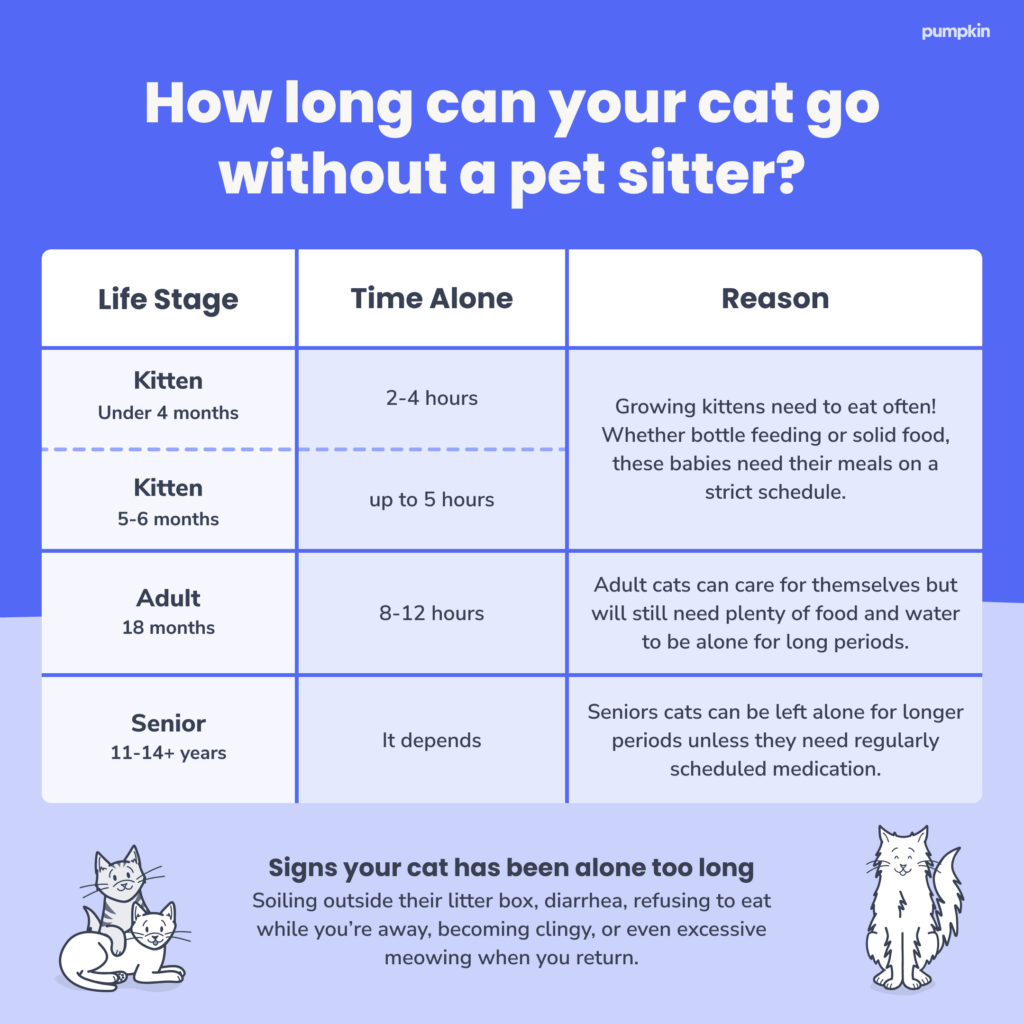
Image Source: www.pumpkin.care
Assessing Your Cat’s Needs and Temperament
When deciding how long to leave your cat alone, it’s crucial to consider their individual personality, age, and health. A confident, independent adult cat will cope differently than a shy kitten or a senior feline with chronic health issues.
Kitten Considerations
Kittens are much more vulnerable than adult cats. They require frequent feeding, constant supervision, and social interaction.
- Age of Kitten: Very young kittens (under 12 weeks) should not be left alone for extended periods. Their bladders are small, they need help grooming, and they rely on their mother or a caregiver for warmth and reassurance.
- Feeding Schedule: Kittens have specific cat feeding schedule requirements, often needing multiple small meals throughout the day. This makes leaving them unattended for more than a few hours challenging.
- Socialization: Kittens need social interaction for healthy development. Extended periods of isolation can lead to behavioral issues.
- Safety: Kittens are naturally curious and can get into dangerous situations easily. A secure environment is paramount.
Leaving a kitten alone for more than 4-6 hours is generally not recommended. If you must be away for longer, arrange for a short-term cat care provider to visit.
Adult Cat Independence
Most healthy adult cats are more independent and can tolerate being left alone for longer stretches. However, “tolerating” doesn’t always mean they thrive.
- Established Routine: Cats are creatures of habit. If your cat is accustomed to your presence, a sudden long absence might cause stress.
- Environmental Enrichment: A bored cat is an unhappy cat. Ensure they have toys, scratching posts, and window perches to keep them occupied.
- Social Interaction: While cats are often portrayed as aloof, many enjoy companionship. If your cat is very bonded to you or other pets, they might experience cat separation anxiety when left alone for too long.
Senior Cat Care
Senior cats may have different needs due to age-related health conditions.
- Health Conditions: Arthritis, kidney disease, or cognitive dysfunction can impact a senior cat’s ability to care for themselves or cope with stress.
- Mobility: If a senior cat has mobility issues, they may struggle to reach their cat litter box or food and water bowls.
- Medication: Senior cats often require medication, which necessitates regular administration by a caregiver.
For senior cats, shorter periods alone are preferable, and regular check-ins from a cat sitter are highly advisable.
Safely Leaving Your Cat Alone: The 24-Hour Mark
Leaving a healthy adult cat for 24 hours is generally considered the maximum safe duration without a check-in, provided certain conditions are met.
Essential Preparations for a 24-Hour Absence
Before leaving your cat for a full day, ensure all their needs are met.
- Abundant Fresh Water: This is non-negotiable. Provide multiple water sources. A large water bowl, a pet water fountain, or even a clean bathtub with a shallow layer of water can ensure a consistent cat water supply. Consider a fountain as many cats prefer running water.
- Sufficient Food: You can leave out enough dry food for a 24-hour period, but be mindful of overeating if your cat is prone to it. For wet food, it’s best to use an automatic feeder that dispenses at set times to prevent spoilage.
- Clean Litter Boxes: A clean cat litter box is essential for your cat’s comfort and health. If you’ll be gone for 24 hours, ensure at least one box is thoroughly cleaned before you leave. If you have multiple cats, or if your cat is particular, having an extra litter box available can be beneficial.
- Safe Environment: Cat-proof your home. Secure any potential hazards like loose electrical cords, toxic plants, or small objects that could be swallowed. Ensure windows and doors are securely closed.
- Comfort and Security: Leave out familiar bedding or a piece of your clothing to provide comfort. Turn on a radio or TV to a low volume to provide background noise and reduce the feeling of silence.
Signs Your Cat May Be Stressed
Even with preparation, some cats will show signs of distress.
- Vocalization: Excessive meowing or crying.
- Destructive Behavior: Scratching furniture or other items beyond normal.
- Changes in Appetite: Refusing to eat or drinking excessively.
- Elimination Issues: Urinating or defecating outside the cat litter box.
- Hiding: Spending an unusual amount of time hidden away.
If you notice these signs, you may need to reconsider how long you leave your cat alone in the future.
Extending Your Absence: Beyond 24 Hours
What about longer trips, like a weekend away or a vacation? Leaving a cat for a weekend requires more planning and often professional assistance.
Leaving Cat for Weekend: Options and Considerations
A weekend trip (2-3 days) usually necessitates more than just stocking up on food and water.
Option 1: Two Visits Per Day
- Cat Sitter: Hiring a cat sitter to visit your home twice a day is an excellent option. A sitter can ensure your cat is fed, has fresh water, the cat litter box is clean, and provide much-needed social interaction. This minimizes stress for your cat and allows them to remain in their familiar environment.
- Friends or Family: If you have trusted friends or family who are knowledgeable about cats, they might be willing to pop in. Ensure they understand your cat’s specific needs and routines.
Option 2: Overnight Cat Stays (Cat Boarding)
- Cat Boarding Facilities: For longer absences or if your cat thrives on social interaction, cat boarding can be a viable option. These facilities provide a safe environment with dedicated care.
- Pros of Boarding:
- Constant supervision by trained staff.
- Regular feeding and cleaning.
- Socialization opportunities with other cats (if your cat is compatible).
- Emergency care is usually on-site.
- Cons of Boarding:
- Stress from unfamiliar environment and sounds.
- Potential exposure to illnesses.
- Can be more expensive than a cat sitter.
- Not all cats adapt well to cat boarding.
When choosing a boarding facility, visit beforehand, check reviews, and ask about their procedures for feeding, cleaning, and handling cat separation anxiety.
Ensuring Adequate Resources for Longer Stays
If you are leaving your cat for more than 24 hours, you need to think beyond just immediate needs.
- Automatic Feeders and Waterers: These can be lifesavers for longer periods.
- Programmable Feeders: Ensure these are reliable and have battery backup. Test them before you leave.
- Water Fountains: These provide a continuous cat water supply and can encourage drinking.
- Litter Box Strategy:
- For a weekend, ensuring two clean cat litter boxes is usually sufficient if you have one cat.
- If you have multiple cats, or are gone for longer than a weekend, consider self-cleaning litter boxes or scheduling more frequent visits from a cat sitter.
- Safe Zones: Create a safe, quiet space where your cat can retreat if they feel overwhelmed. This could be a carrier with the door open, a high shelf, or a room with their essentials.
Addressing Cat Separation Anxiety
Some cats are more prone to cat separation anxiety, which can manifest as distress when left alone.
Recognizing the Signs of Separation Anxiety
- Excessive vocalization (meowing, yowling) when you prepare to leave or are absent.
- Destructive behavior such as scratching doors or windows.
- Inappropriate urination or defecation, often near doors or windows.
- Over-grooming, leading to bald patches.
- Refusal to eat or drink when you are gone.
- Pacing or restlessness.
Strategies for Managing Separation Anxiety
- Gradual Desensitization: Gradually increase the time you leave your cat alone. Start with short absences and slowly extend them.
- Ignore Departure Cues: Avoid making a big fuss when you leave or return. Keep greetings calm.
- Provide Enrichment: Leave out puzzle feeders, interactive toys, and hiding places to keep your cat engaged and distracted.
- Calming Aids: Consider diffusers with feline pheromones, or consult your veterinarian about calming supplements or prescription medications.
- Professional Help: For severe cases, a veterinary behaviorist can provide tailored strategies.
Planning for Extended Absences (Vacations)
When you plan to be away for more than a few days, it’s essential to have a robust care plan.
The Role of a Cat Sitter
A cat sitter is often the best choice for cats who prefer their home environment and may be prone to cat separation anxiety.
- Choosing the Right Sitter:
- Experience: Look for someone with experience caring for cats.
- References: Always ask for and check references.
- Insurance: Ensure they are insured for pet sitting.
- Meet and Greet: Arrange a meeting before you leave to ensure your cat is comfortable with them and they understand your cat’s routine, cat feeding schedule, and any medical needs.
- Services: Discuss the services they offer, such as feeding, fresh water, cat litter box cleaning, playtime, and administering medication.
- Preparing Your Sitter:
- Leave detailed instructions.
- Provide contact information for yourself, your vet, and an emergency contact.
- Ensure they have access to all necessary supplies.
Cat Boarding as an Alternative
If your cat is social and adaptable, cat boarding can be a good option for longer trips.
- Research Facilities: Look for reputable cat boarding facilities with good reviews and clean, stimulating environments.
- Vaccination Requirements: Most facilities require up-to-date vaccinations for diseases like rabies and feline distemper.
- What to Pack: Bring your cat’s usual food to avoid digestive upset, their favorite toys, and bedding that smells familiar.
Creating a Safe and Stimulating Environment
Regardless of how long you leave your cat, creating a safe and stimulating environment is key to their well-being.
Essential Home Setup
- Secure Windows and Doors: Prevent escapes and unwanted entry.
- Hazard Removal: Put away medications, cleaning supplies, and small objects that could be a choking hazard.
- Comfort Zones: Provide cozy beds, blankets, and high perches.
- Scratching Posts: Offer various types of scratching surfaces to satisfy their natural instincts.
- Interactive Toys: Rotate toys to keep your cat engaged. Puzzle feeders are excellent for mental stimulation.
Maintaining Routine
Cats thrive on routine. Try to maintain their regular cat feeding schedule and playtime as much as possible, even when you’re away.
Frequently Asked Questions About Leaving Cats Alone
Here are some common questions pet owners have about leaving their cats unattended.
Q1: Can I leave my cat for a week?
Leaving a cat for a full week without any human contact is generally not recommended. While some cats might survive, it is stressful and risky. The ideal scenario for a week-long absence is to have a cat sitter visit at least once daily, or ideally twice, to ensure proper feeding, fresh water, cat litter box maintenance, and social interaction. Alternatively, cat boarding is a more appropriate option for extended periods.
Q2: What if my cat is very needy?
If your cat is particularly needy or exhibits signs of cat separation anxiety, you should err on the side of caution. Shorter periods alone are best, and any absence longer than a few hours should ideally involve a cat sitter or a designated caregiver. Consider gradual desensitization techniques and enrichment activities to help manage their anxiety.
Q3: How many litter boxes do I need?
The general rule is one cat litter box per cat, plus one extra. For a 24-hour absence, ensure the boxes are clean before you leave. For longer trips, the number and cleanliness of the litter boxes become even more critical, especially if you are relying on automated feeders and waterers.
Q4: Is a water fountain better than a bowl for my cat?
Many cats prefer drinking from running water, so a cat water supply from a fountain can encourage them to drink more, which is beneficial for their health. They also tend to keep fountains cleaner than still water bowls. If you’re leaving your cat for an extended period, multiple water sources, including a fountain, are a good idea.
Q5: What should I do if my cat gets sick while I’m away?
This is a critical consideration. If you are leaving your cat for more than 24 hours, you must have a plan.
- Emergency Contact: Provide your veterinarian’s contact information to your cat sitter or boarding facility.
- Emergency Vet Authorization: Sign a release form with your vet authorizing them to treat your cat in an emergency and outlining your payment arrangements.
- Sitter Preparedness: Ensure your cat sitter knows the signs of illness and knows who to contact immediately.
Leaving your cat for extended periods requires careful planning to ensure their safety, health, and happiness. By assessing your cat’s individual needs and making appropriate arrangements, you can enjoy your time away with peace of mind.