
Cats are natural acrobats, capable of amazing feats of agility and strength. But how high can a cat safely jump from without risking injury? While there’s no single definitive height, understanding a cat’s anatomy, reflexes, and landing techniques provides crucial insights into their remarkable cat jump safety. Generally, cats can withstand falls from surprising heights, often surprising owners with their ability to land on their feet.
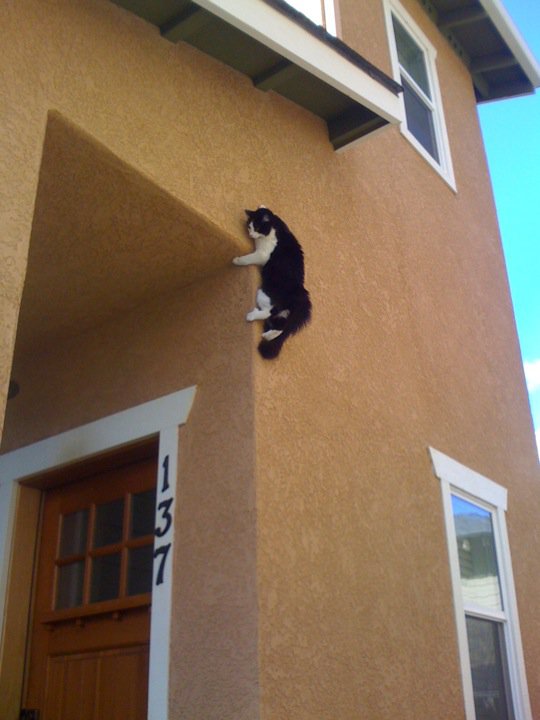
Image Source: www.todayifoundout.com
Feline Physiology and Jumping Prowess
Cats possess a unique physiology that contributes to their impressive jumping and falling capabilities. Their strong hind legs are built for explosive power, allowing them to propel themselves vertically and horizontally with incredible force. This powerful musculature is key to their feline jump capacity.
The Power of the Hindquarters
- Powerful Muscles: The gastrocnemius and soleus muscles in a cat’s calves are highly developed, providing the initial burst of energy for a jump.
- Flexible Spine: A cat’s spine is exceptionally flexible, composed of more vertebrae than a human’s. This allows for greater range of motion and the ability to twist and orient themselves in mid-air.
- Low Center of Gravity: Their compact bodies and flexible spines help maintain a low center of gravity, which aids in balance during both ascent and descent.
The Righting Reflex: A Natural Survival Mechanism
Perhaps the most critical element in a cat’s ability to survive falls is their innate “righting reflex.” This is an instinctual, complex neuromuscular process that allows them to orient themselves in mid-air and land on their feet.
- Visual Cues: The cat’s eyes and inner ear (which controls balance) work in tandem to determine which way is up.
- Spinal Flexibility in Action: As the cat falls, its flexible spine allows it to rotate its body. The head turns first, followed by the torso, and finally the hindquarters.
- Leg Preparation: Once oriented, the cat extends its legs downwards, preparing to absorb the impact.
This reflex is so ingrained that kittens develop it within weeks of birth, demonstrating their remarkable adaptation to environments where falling is a possibility. It’s this reflex that allows them to execute a successful cat landing techniques from significant heights.
Deciphering Cat Jump Height and Safe Distances
When considering cat jump height, it’s important to distinguish between a voluntary jump and an accidental fall. Cats are typically very accurate when jumping to a specific target, using their eyesight to judge distances and their legs to propel themselves. The cat jumping ability from a standing position is often much greater than their comfort level for an uncontrolled descent.
Voluntary Jumps vs. Accidental Falls
- Voluntary Jumps: When a cat intentionally jumps to a perch, shelf, or piece of furniture, they assess the distance and trajectory. Their success rate is remarkably high. They can easily clear distances several times their body length. For instance, a domestic cat can typically jump about 5-6 times its own body length vertically. This means a cat that is 10 inches long could potentially jump 50-60 inches (4-5 feet) straight up. Horizontally, they can often jump even further.
- Accidental Falls: Falls are different. They are uncontrolled and can happen from any height. While the righting reflex is powerful, the impact force still needs to be managed. The safe cat jumping distance is often less about the height they can jump and more about the height they can safely fall from.
Factors Influencing Safe Fall Height
The concept of safe cat heights is complex and influenced by several factors:
- Age and Health: Kittens and senior cats may not have the same agility or strength as healthy adult cats. Illness or injury can also impair their ability to execute the righting reflex effectively or absorb impact.
- Surface: Landing on a soft surface like carpet or grass is significantly safer than landing on a hard surface like concrete or tile.
- Height of the Fall: This is a critical factor. While cats are resilient, extremely high falls can still lead to severe cat fall injuries.
How High Can A Cat Safely Jump?
This is the million-dollar question, and the answer is nuanced. While cats are famous for surviving falls from high places, it’s not a guarantee of safety. Research and anecdotal evidence suggest a peculiar phenomenon related to falls: cats falling from very high distances (above 7 stories, or roughly 70 feet) sometimes sustain fewer severe injuries than those falling from moderate heights (2-7 stories). This is known as “high-rise syndrome.”
The High-Rise Syndrome Phenomenon
The prevailing theory behind high-rise syndrome suggests that:
- At Moderate Heights (2-7 stories): Cats may not have enough time to fully right themselves and prepare their bodies for impact. They might still be in the process of twisting or haven’t optimally braced themselves, leading to more torsional or impact injuries to limbs and the chest.
- At Very High Heights (Above 7 stories): With more time in the air, cats are able to fully execute their righting reflex. They can spread their bodies flat like a parachute, distributing their weight and slowing their descent somewhat. Upon impact, they may be better positioned to spread their legs and absorb the shock. However, the impact force is still immense, and severe injuries are still very common.
This doesn’t mean that high falls are safe. It simply highlights that the physics of the fall and the cat’s response can lead to different injury patterns. The maximum cat jump from which a cat can emerge unharmed is not a fixed number and depends on the circumstances.
What Constitutes “Safe”?
A “safe” jump or fall implies no significant injury. This means:
- No broken bones
- No internal organ damage
- No head trauma
- No serious soft tissue injuries
For domestic cats, while they are excellent jumpers, falls from heights exceeding about four stories (approximately 40-50 feet) significantly increase the risk of serious cat fall injuries. Even lower falls can be dangerous depending on how the cat lands and the surface below.
Understanding Cat Landing Techniques
The way a cat lands is crucial to minimizing injury. Their cat landing techniques are a sophisticated application of their physical abilities.
The Mechanics of a Safe Landing
- Righting: As mentioned, the first step is to get their body oriented correctly.
- Spreading: Once upright, they extend their legs and arch their back, creating a wider base.
- Shock Absorption: The legs act as shock absorbers. They bend their knees and elbows upon impact, dissipating the energy. The elasticity of their bones and soft tissues plays a vital role.
- Distribution of Force: By spreading their legs, they distribute the impact force over a larger area of their body, reducing the stress on any single limb or joint.
The Role of Surface and Impact
The nature of the landing surface is paramount in determining the severity of injury.
- Soft Surfaces (Grass, Carpet, Soil): These surfaces provide cushioning and can absorb a significant portion of the impact energy, making falls from moderate heights much less dangerous.
- Hard Surfaces (Concrete, Asphalt, Tile): These surfaces offer little to no give. The impact force is absorbed directly by the cat’s body, leading to a much higher likelihood of fractures, sprains, and internal damage.
Common Cat Fall Injuries
Despite their incredible resilience, cats are not invincible. Falls can lead to a range of injuries, from minor bruises to life-threatening conditions.
Types of Injuries
- Fractures: Broken bones are very common, particularly in the legs, jaw, and pelvis. The force of impact can be immense, exceeding the bone’s tensile strength.
- Dislocations: Joints can be dislocated due to the sudden impact.
- Soft Tissue Damage: Bruising, muscle tears, and ligament damage can occur.
- Internal Injuries: This is often the most serious consequence. The jarring impact can damage internal organs such as the lungs (pneumothorax, pulmonary contusions), liver, spleen, and bladder.
- Dental and Jaw Injuries: Teeth can be chipped or broken, and the jaw can be fractured.
- Head Trauma: Concussions or more severe brain injuries are possible.
- “Splat Syndrome”: In severe cases, especially from very high falls where the cat has spread out, the internal organs can be severely compressed, leading to significant injuries.
Factors Increasing Injury Risk
- Unprepared Landing: If the cat is startled or doesn’t have time to orient itself.
- Hard Landing Surface: As discussed, concrete or tile significantly increases risk.
- Pre-existing Conditions: Cats with arthritis, obesity, or other health issues are more vulnerable.
- Young Kittens or Senior Cats: Their bodies may not be as robust in handling impacts.
Preventing Cat Falls: Ensuring Cat Jump Safety
The best approach to cat jump safety is prevention. While you can’t eliminate all risks, you can take steps to minimize them.
Making Your Home Cat-Friendly
- Secure Windows and Balconies: This is paramount. Ensure window screens are sturdy and well-fitted. Consider installing cat-proof netting or catios (cat patios) on balconies.
- Provide Safe Climbing Opportunities: Offer accessible cat trees, shelves, and perches at varying heights. This allows your cat to satisfy their natural desire to climb and jump in a controlled environment. Ensure these structures are stable and won’t tip over.
- Clear Clutter: Reduce the number of precarious items on shelves or windowsills that a cat might knock over or fall from.
- Supervise Kittens: Kittens are more prone to accidents as they are still learning their limits. Keep a close eye on them, especially near windows and balconies.
- Teach Your Cat: While you can’t “teach” a cat not to fall, you can encourage them to use their designated climbing structures. Positive reinforcement for jumping onto safe perches can be effective.
Assessing Potential Hazards
- Window Ledges: Even seemingly small ledges can be a hazard if a cat is startled or loses balance.
- High Shelves: Ensure shelves are wide enough and stable for your cat to land comfortably.
- Loose Furniture: Avoid placing furniture near open windows in a way that creates a tempting but dangerous pathway.
Frequently Asked Questions About Cat Jumps and Falls
Q1: Can my cat jump onto a very high shelf without hurting itself?
A1: While cats are incredible jumpers and can reach impressive heights, it’s crucial to consider the landing. If the shelf is stable, wide enough for a comfortable landing, and the cat can jump to it voluntarily and accurately, it’s generally less risky than an accidental fall. However, always assess the stability of the surface and the potential for your cat to be startled. For voluntary jumps, a height of 5-6 times their body length vertically is often achievable.
Q2: What is the safest height for a cat to jump from?
A2: There isn’t a single “safest” height because so many factors influence the outcome. For accidental falls, heights below 2-3 feet are generally very low risk for healthy adult cats, especially if they land on a soft surface. However, even a fall from a table can be dangerous if the cat lands awkwardly.
Q3: My cat fell from a second-story window. Should I be worried?
A3: Yes, you should always be concerned about any fall. While cats have a remarkable righting reflex, falls from even a second story (around 15-20 feet) can cause injuries. Look for signs of distress, limping, difficulty breathing, vomiting, or behavioral changes. It’s advisable to consult your veterinarian immediately after any significant fall, even if your cat appears unharmed.
Q4: How do I know if my cat has been injured from a fall?
A4: Watch for any changes in behavior or physical condition. Signs of injury can include:
* Limping or reluctance to put weight on a limb.
* Swelling or pain when touching a limb.
* Difficulty breathing or rapid breathing.
* Vomiting or lethargy.
* Changes in appetite or thirst.
* Bleeding (internal or external).
* Wounds or abrasions.
* Confusion or disorientation.
* Crying out in pain.
Q5: Is it possible to train a cat to jump safely?
A5: You can’t directly train a cat to “jump safely” in the sense of teaching them how to fall. However, you can encourage them to use safe, designated jumping and climbing structures within your home, like sturdy cat trees and shelves. This redirection helps satisfy their natural instincts in controlled environments, reducing the likelihood of them attempting dangerous leaps from unstable or excessively high places.
Q6: How do I prevent my cat from jumping off balconies?
A6: Balconies are a significant hazard. The most effective methods include:
* Secure Netting: Install sturdy, cat-proof netting that completely encloses the balcony.
* Catios: Building a “cat patio” or enclosed outdoor space is an excellent way for cats to enjoy fresh air safely.
* Supervision: Never leave your cat unattended on a balcony, especially if it’s not fully secured.
* Awareness: Ensure all doors and gates leading to the balcony are kept closed.
Q7: What is the maximum cat jump distance I should be concerned about for my indoor cat?
A7: For indoor cats, the primary concern is falls from furniture, windowsills, or shelves. While they can typically manage short drops with ease, anything above a few feet can pose a risk if they land awkwardly or are startled. Be particularly cautious with open windows on upper floors and ensure window screens are secure. The concept of cat jump safety is about managing these everyday risks.
Conclusion: Respecting Feline Agility While Prioritizing Safety
Cats are extraordinary creatures, gifted with remarkable agility and an innate survival reflex. Their feline jump capacity allows them to navigate our world with impressive grace. However, it’s essential to remember that even the most athletic cat is not immune to injury. While they can often surprise us with their ability to withstand falls, understanding the nuances of cat landing techniques, the risks of cat fall injuries, and the importance of preventing cat falls is crucial for any responsible cat owner. By providing a safe environment and respecting their natural abilities, we can ensure our feline companions continue to leap and explore without unnecessary danger, maintaining their overall cat jump safety.