
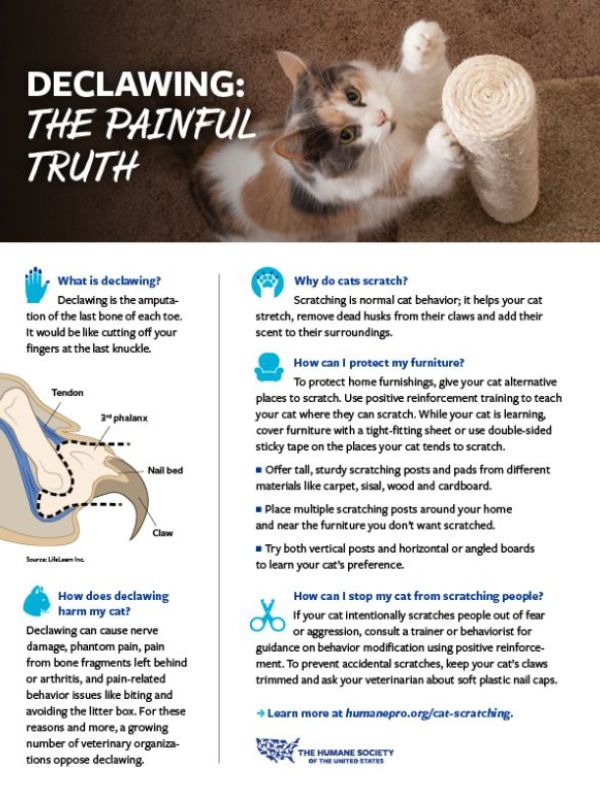
Image Source: humanepro.org
How Does Declawing A Cat Work? Explained
Declawing a cat, technically known as onychectomy, is a surgical procedure that involves the amputation of the last bone (the distal phalanx) of each toe. What is declawing? It is the surgical removal of a cat’s claws and their corresponding nail beds. Can I declaw my cat? While technically possible, many veterinary organizations and animal welfare groups strongly advise against it due to the ethical concerns and potential negative impacts on feline well-being. Who is declawing for? Historically, it was performed to prevent cats from scratching furniture or people, but modern alternatives are now widely recommended.
This complex procedure, often referred to as feline declawing procedure or cat nail removal, goes far beyond simply trimming the claws. It involves paw surgery where a veterinarian performs a delicate amputation of the tissue at the base of the nail, effectively removing the entire claw and its growth center. This means that the claw can never regrow. The veterinary declawing process is a significant intervention with implications for a cat’s physical and behavioral health.
Deciphering the Declawing Process: A Surgical Overview
The declawing process is not a minor cosmetic alteration. It is a serious surgical procedure that requires anesthesia and carries inherent risks, much like any surgery. The veterinarian’s goal is to cleanly remove the entire claw, including the bone that anchors it. This is typically achieved through one of two main surgical methods: the scalpel method or the guillotine trimmer method. Each has its own approach to severing the tissue and bone.
The Scalpel Method: Precision and Amputation
In the scalpel method of cat nail removal, the veterinarian uses a sharp scalpel to make an incision through the soft tissue at the joint. This incision precisely cuts through the connective tissues and the periosteum (the membrane covering the bone) of the distal phalanx. The entire claw, along with its sheath and the underlying bone segment, is then removed. The veterinarian then carefully examines the paw to ensure all the claw material has been cleanly removed. This method is often favored by some for its precision in cleanly separating the bone.
The Guillotine Trimmer Method: A Different Approach to Bone Removal
Another common technique involves using a specialized guillotine-type trimmer. This tool is designed to cut through the claw at the joint, severing the bone as well. The trimmer essentially acts like a heavy-duty nail clipper, but it’s designed to cut through bone. Similar to the scalpel method, the goal is to remove the entire claw and its growth center. Careful attention is paid to ensure a clean cut and the complete removal of the distal phalanx.
Beyond the Cut: What Else Happens in Paw Surgery?
Regardless of the specific tool used, the core of the feline declawing procedure remains the amputation of the terminal phalanx. After the claw extraction, the wounds are typically closed using sutures or surgical glue. The veterinarian will then apply bandages to protect the surgical sites and minimize bleeding and swelling. Pain management is a critical component of post-operative care, with veterinarians administering analgesics to ensure the cat’s comfort. The recovery period for veterinary declawing can be significant, and owners are instructed on how to care for their cat’s bandaged paws and manage their activity levels.
The Tenectomy Alternative: A Separate Discussion
It’s important to differentiate between onychectomy and tenectomy. While both are surgical procedures related to claws, they target different structures. Tenectomy involves cutting the tendon that allows the cat to extend its claws. In this procedure, the claw itself is not removed, but the cat loses the ability to extend it. This method is less common than onychectomy and is also subject to ethical debate. The discussion here focuses primarily on onychectomy, which is what most people refer to when they say “declawing.”
The Anatomy of a Cat’s Paw: Why Bone Removal is Significant
To truly grasp how declawing works, we need to look at the anatomy of a cat’s paw. Each toe on a cat’s paw contains three bones, called phalanges. The claw grows from the third and final bone, the distal phalanx. When a cat is declawed through onychectomy, this bone removal means that the entire structure responsible for the claw’s growth is gone.
- Phalanx 1 (Proximal): The first bone in the toe.
- Phalanx 2 (Middle): The second bone.
- Phalanx 3 (Distal): The third and final bone, where the claw is attached. This is the bone that is removed during declawing.
The nail bed, where the claw grows, is also removed. This is crucial because if even a small part of the growth center is left behind, the claw can regenerate, albeit often abnormally. Therefore, veterinary declawing necessitates precise amputation of this final bone segment.
Fathoming the Implications: What Does Declawing Really Mean?
Declawing is essentially a partial amputation of a cat’s toes. It is not simply removing the nail. The surgical removal of the last bone in each toe alters the cat’s foot structure and can have lasting consequences. This is why many animal welfare organizations consider it a painful and unnecessary procedure.
Short-Term Effects: Pain and Discomfort
Immediately following the feline declawing procedure, cats will experience significant pain and discomfort. They will likely have difficulty walking, and their paws will be sensitive to touch. The bandages will need to be kept clean and dry, and cats will need to be confined to prevent them from running or jumping, which could disrupt the healing process.
Long-Term Consequences: Beyond Claw Extraction
The cat nail removal through onychectomy can lead to a range of long-term problems. These can include:
- Chronic Pain: Some cats may develop phantom limb pain or ongoing discomfort in their paws.
- Lameness: Altered gait and pain can lead to a permanent limp or difficulty walking.
- Behavioral Changes:
- Litter Box Problems: Cats may associate the litter box with pain or discomfort, leading to inappropriate elimination.
- Biting: Since they can no longer scratch to defend themselves or express themselves, some cats may resort to biting.
- Avoidance of Perching: Cats often enjoy perching in high places. Altered paw structure can make this uncomfortable or impossible.
- Nerve Damage: There is a risk of nerve damage during the amputation process, which can lead to numbness or hypersensitivity in the paws.
- Paw Pad Issues: Some cats may develop calluses or sores on their paw pads due to altered weight distribution.
The removal of the entire claw and its anchoring bone is a fundamental change to a cat’s physical being. It affects their ability to climb, explore, and perform natural behaviors. The bone removal aspect of the declawing process is often overlooked by those considering the procedure.
Alternatives to Declawing: Protecting Furniture and Felines
Given the ethical concerns and potential for harm associated with veterinary declawing, many veterinarians and animal behaviorists strongly advocate for alternative methods to manage unwanted scratching. These alternatives focus on addressing the underlying reasons for scratching and redirecting the behavior in a humane way.
Scratching Posts: Natural Instincts Fulfilled
Providing appropriate scratching surfaces is paramount. Cats scratch for various reasons: to sharpen their claws, stretch their muscles, mark their territory (visually and scent-wise), and relieve stress. A variety of scratching posts and surfaces can cater to these needs.
- Types of Scratching Posts:
- Vertical Posts: Made of sisal rope, cardboard, or carpet, these allow cats to stretch their full bodies.
- Horizontal Scratchers: Cardboard or sisal mats that can be placed on the floor.
- Scratching Trees and Condos: Multi-level structures that offer climbing and scratching opportunities.
- Placement: Scratching posts should be placed in prominent areas where the cat spends time, such as near sleeping areas or doorways.
Nail Trims: Regular Maintenance
Regular nail trims are a simple and effective way to manage a cat’s claws. Most cats can be trained to tolerate nail trimming, which can significantly reduce the damage caused by scratching. It’s important to use sharp, cat-specific nail clippers and to only trim the tip of the nail, avoiding the quick (the pink part that contains blood vessels and nerves).
Nail Caps: A Temporary Solution
Soft plastic caps, such as “Soft Paws,” can be glued onto a cat’s trimmed claws. These caps prevent the claws from causing damage. They are typically replaced every 4-6 weeks as the claws grow. This is a non-surgical cat nail removal alternative that allows the cat to still engage in scratching behavior without the destructive consequences.
Behavioral Training and Enrichment
Understanding a cat’s needs and providing adequate enrichment can go a long way in preventing destructive scratching.
- Playtime: Regular interactive play sessions can help cats burn energy and reduce stress, making them less likely to scratch out of boredom or anxiety.
- Environmental Enrichment: Providing opportunities for climbing, exploring, and mental stimulation can keep cats happy and engaged.
- Positive Reinforcement: Rewarding cats for scratching appropriate surfaces with praise or treats can reinforce the desired behavior.
Deterrents
If a cat is scratching in an undesirable location, deterrents can be used. These can include:
- Double-Sided Sticky Tape: Cats dislike the sticky texture.
- Aluminum Foil: The crinkly sound and texture can deter them.
- Citrus Scents: Many cats are repelled by citrus smells.
These alternatives aim to preserve the cat’s natural abilities and avoid the pain and potential long-term health issues associated with onychectomy, which involves bone removal and amputation.
The Ethical Debate: Why So Much Concern?
The debate surrounding declawing is heated, and for good reason. Many veterinary professional organizations, including the American Veterinary Medical Association (AVMA) and the American Association of Feline Practitioners (AAFP), do not support or recommend declawing as a routine procedure. Their stance is based on the understanding that declawing is an unnecessary mutilation that can cause pain and suffering to cats.
- Pain and Suffering: The feline declawing procedure is undeniably painful. Even with appropriate anesthesia and pain management, the amputation of toe bones and the subsequent healing process are inherently uncomfortable.
- Loss of Natural Behavior: Claws are essential for a cat’s natural behaviors, including climbing, balance, defense, and exploration. Removing them fundamentally alters a cat’s ability to interact with its environment.
- Irreversibility: Declawing is permanent. Once the bone removal has occurred, there is no going back.
The trend in veterinary medicine and animal welfare is moving away from declawing and towards educating owners about humane alternatives. While veterinary declawing has historically been a common practice, the modern understanding of feline welfare emphasizes preserving the cat’s physical integrity and addressing behavioral issues through positive, non-surgical methods. The very nature of claw extraction as an amputation is a significant ethical consideration.
Frequently Asked Questions About Declawing
Q1: Is declawing the same as trimming a cat’s nails?
No, declawing is a surgical procedure that involves the amputation of the last bone of each toe. Trimming nails only removes the sharp tip of the claw.
Q2: Does declawing hurt my cat?
Yes, declawing is a painful surgical procedure. While anesthesia and pain medication are used, cats will experience post-operative pain and discomfort.
Q3: Can my cat still climb after being declawed?
While a cat can still climb to some extent, their ability may be compromised. The bone removal can affect their grip and balance.
Q4: Will my cat have problems in the litter box after being declawed?
Some cats develop litter box aversion after declawing. They may associate the pain in their paws with the litter box.
Q5: Are there any health risks associated with declawing?
Yes, risks include infection, chronic pain, lameness, nerve damage, and behavioral changes such as biting or litter box issues.
Q6: What are the alternatives to declawing?
Alternatives include regular nail trims, scratching posts, nail caps, and behavioral training.
Q7: Is declawing legal everywhere?
Declawing is illegal in many cities and countries due to ethical concerns, including places like Australia, New Zealand, and many cities in Canada and the United States.
Q8: If I must declaw, how is the procedure performed?
The feline declawing procedure involves the surgical removal of the distal phalanx of each toe, often using a scalpel or a guillotine trimmer. This cat nail removal effectively constitutes an amputation.
Q9: What is a tenectomy?
Tenectomy is a procedure where the tendon that allows a cat to extend its claws is severed. The claw itself remains, but the cat cannot extend it. This is different from onychectomy, which is cat nail removal and bone removal.
Q10: Is declawing considered a standard veterinary procedure?
While historically performed, many modern veterinary organizations do not recommend or support declawing due to the ethical and welfare concerns associated with this paw surgery involving amputation. The focus is shifting towards humane alternatives to claw extraction.