
A cat can be declawed at almost any age, but it is most commonly performed on kittens between 3 to 6 months old. However, the decision to declaw an adult cat or an older cat is a complex one with significant implications.
Declawing, also known medically as an onychectomy, is a surgical procedure that removes the last bone of each toe. While it might seem like a simple solution to preventing furniture damage or potential scratches, it’s a serious surgery with lasting effects on a cat’s physical and emotional well-being. This blog post will delve into the nuances of feline declawing age, exploring the different stages of a cat’s life when this procedure might be considered, the arguments for and against it, and what responsible pet owners should contemplate.
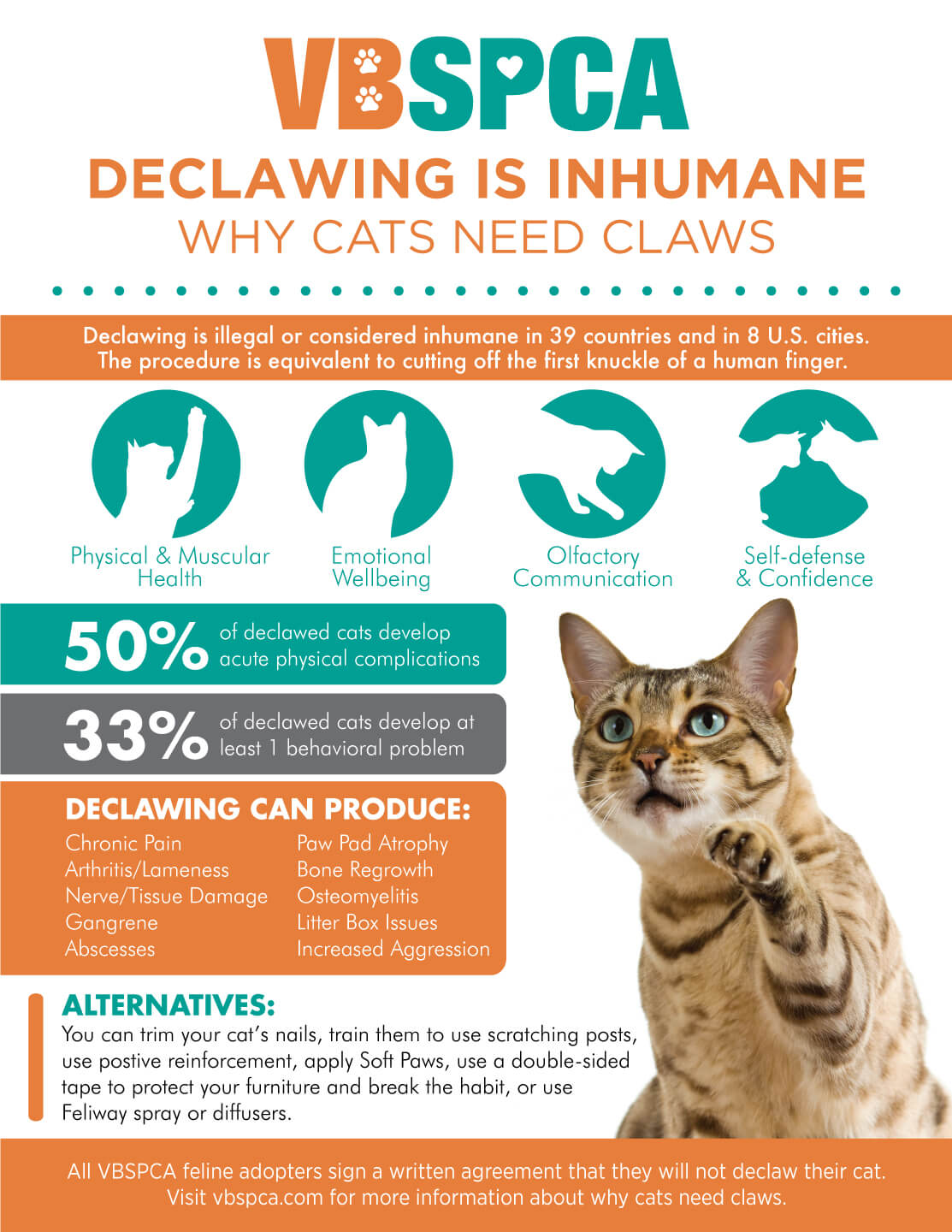
Image Source: vbspca.com
The Ages of Declawing: A Lifespan Perspective
When discussing cat declaw surgery age, it’s important to consider the typical life stages of a cat and how the procedure might be viewed at each point.
Kitten Declawing Age: The Early Intervention Debate
Many veterinarians and cat owners consider the kitten declawing age to be the most common time for this procedure. The reasoning behind this often centers on the idea that younger cats recover more quickly and may adapt better to the absence of their claws.
Common Rationale for Kitten Declawing:
- Faster Healing: Kittens generally have more resilient bodies and can bounce back from surgery faster than adult or senior cats. Their immune systems are robust, and they tend to have fewer pre-existing health conditions that could complicate recovery.
- Easier Adjustment: It’s believed that kittens, being in a more formative stage, might adapt more readily to the changes brought about by declawing. Their habits are still being established, and they may be less likely to develop behavioral issues related to the procedure compared to older cats who have long-established scratching routines.
- Preventative Measure: For some owners, declawing a kitten is seen as a preventative measure to avoid future conflicts over scratching behavior. They aim to “get it done” before destructive habits can even begin.
However, the debate about declawing kittens is significant. Ethical considerations are paramount. Many animal welfare organizations and veterinary bodies strongly advise against declawing at any age, especially in young animals whose physical and behavioral development is still underway.
Adult Cat Declaw Age: Addressing Established Habits
When a cat reaches adulthood, they have usually developed a set of behaviors, including scratching. The adult cat declaw age is often when owners face the decision due to persistent scratching issues that haven’t been resolved through training or environmental enrichment.
Considerations for Declawing Adult Cats:
- Established Habits: Adult cats have a lifetime of scratching experience. Their instinct to scratch is deeply ingrained for marking territory, stretching muscles, and shedding nail sheaths. Removing their claws can lead to frustration and the development of alternative, potentially undesirable behaviors.
- Increased Risk of Behavioral Issues: Adult cats may be more prone to developing anxiety, aggression, or litter box avoidance after declawing. They have a more developed sense of self and their environment, and a significant change like claw removal can be more disruptive.
- Surgical Risks: While adult cats can undergo surgery, they may have a higher risk of complications compared to kittens due to potential underlying health issues, albeit often minor. The recovery period might also be slightly longer.
- Owner Frustration: Often, the decision to declaw an adult cat stems from owner frustration with scratched furniture or concerns about safety with children or other pets.
Older Cat Declawing: A Controversial Decision
The question of older cat declawing or declawing older cats is one that raises significant concerns within the veterinary community and among animal advocates. Generally, declawing is not recommended for senior cats.
Reasons Against Declawing Older Cats:
- Compromised Healing: Older cats often have slower healing capabilities and a higher likelihood of developing age-related health problems like arthritis, kidney disease, or dental issues. These conditions can be exacerbated by the stress and pain of surgery.
- Increased Pain and Discomfort: Older cats may already be experiencing joint pain or arthritis. The amputation of the last bone of their toes can significantly worsen these conditions, making walking and resting uncomfortable.
- Anesthetic Risks: Anesthesia carries a greater risk for older animals due to potential organ function changes.
- Behavioral Changes: Senior cats are often set in their ways. The trauma of declawing can lead to severe behavioral issues, including increased fear, aggression, or a reluctance to move, impacting their quality of life.
- Ethical Considerations: The potential for significant suffering and the availability of humane alternatives make declawing older cats a highly questionable practice.
Declawing Procedures Age Limits: What the Veterinary Profession Recommends
While there might not be strict, universally enforced declawing procedures age limits in every jurisdiction, the prevailing professional recommendation from many veterinary associations leans away from declawing, especially as cats age.
Many veterinary professionals would argue that any age is too young to declaw a cat due to the inherent pain and potential long-term consequences. However, when the procedure is performed, the common window is indeed the kittenhood phase.
Key Considerations for Veterinary Professionals:
- Pain Management: Declawing is a painful procedure, regardless of age. Effective pain management is crucial before, during, and after surgery.
- Surgical Techniques: Different surgical techniques exist (scalpel vs. laser), each with its own recovery profile and potential complications. The choice of technique can also be influenced by the cat’s age and overall health.
- Client Education: A responsible veterinarian will thoroughly educate the owner about the risks, benefits (which are often disputed), and alternatives to declawing before agreeing to perform the procedure.
When is Declawing Done on Cats? Examining the Triggers
The question of when is declawing done on cats often points to a confluence of factors, primarily driven by owner concern over property damage or safety.
Common Triggers for Declawing Consideration:
- Furniture Destruction: This is arguably the most common reason. When scratching is perceived as uncontrollable and damaging to valuable furniture.
- Concerns for Children: Parents of young children may fear their child being scratched.
- Concerns for Other Pets: In multi-pet households, owners might worry about accidental injuries between animals.
- Inability to Manage Scratching Behavior: Despite trying various methods, some owners feel declawing is their last resort.
It is crucial to emphasize that scratching is a natural and necessary behavior for cats. The focus should always be on redirecting this behavior rather than eliminating the tool for it.
Optimal Age for Cat Declaw: The Veterinary Consensus (or Lack Thereof)
The concept of an optimal age for cat declaw is a contentious one. If one had to consider an “optimal” age from a purely surgical recovery perspective, it would likely be the youngest age at which the procedure can be safely performed. However, this does not account for the ethical and behavioral implications.
- Young Kittens (3-6 months): As mentioned, this is the most common age due to perceived faster healing and easier adjustment.
- Late Adolescent/Early Adult (6-18 months): Some owners might wait until their cat is a bit older to see if scratching habits can be managed through training.
- No Optimal Age for Ethical Reasons: Many veterinary professionals and welfare organizations would state that there is no “optimal” age because the procedure itself is considered unethical and harmful.
The ethical argument against declawing at any age is strong. The procedure is an amputation, removing not just the claw but the third phalanx (the last bone) of each toe. This can lead to chronic pain, phantom limb sensations, and a host of other physical and behavioral problems.
Cat Age for Declawing: A Multifaceted Decision
When owners consider a cat age for declawing, they are often weighing the perceived immediate benefits against the long-term health and happiness of their feline companion. The decision is rarely straightforward and should involve extensive research and consultation with a veterinarian.
Declawing Benefits Age: A Critical Examination
The notion of declawing benefits age is highly debatable. While proponents might cite benefits such as preventing furniture damage or reducing the risk of scratches, these are often viewed as short-term solutions that come at a significant cost to the cat.
Alleged “Benefits” vs. Reality:
- Benefit: Prevents furniture damage.
- Reality: This can be achieved through appropriate scratching posts, deterrents, and nail trimming. The cost to the cat’s physical and emotional health outweighs this perceived benefit.
- Benefit: Prevents scratches to humans.
- Reality: Nail trimming significantly reduces the risk of injury. Teaching children how to interact respectfully with cats is also crucial.
- Benefit: Reduces risk to other pets.
- Reality: Similar to human safety, proper socialization and nail trimming can mitigate risks.
It’s important to note that the “benefits” are primarily for the owner and do not directly benefit the cat. In fact, the procedure can create numerous problems for the cat.
The Surgical Reality: What Declawing Entails
To fully grasp the age-related considerations, it’s essential to understand the procedure itself.
Surgical Techniques and Their Impact
There are two primary methods of declawing:
- Scalpel Method: The vet uses a scalpel to cut through the tissue and remove the claw and the bone.
- Laser Method: A surgical laser is used to remove the claw and bone. Proponents claim this method cauterizes blood vessels, leading to less bleeding and potentially faster healing. However, it still involves the amputation of the toe bone.
Regardless of the technique, the procedure involves:
- Anesthesia: The cat is placed under general anesthesia.
- Tourniquet: A tourniquet is applied to the limb to reduce bleeding.
- Amputation: The veterinarian removes the third phalanx of each digit.
- Suturing/Stapling: The wound is closed with sutures or surgical staples.
- Bandaging: The paws are typically bandaged.
Post-operative care is critical and includes pain medication and restricted activity.
Long-Term Consequences: Beyond the Age Factor
The impact of declawing can extend far beyond the immediate recovery period, and these consequences are not necessarily age-dependent, though they can be more challenging for older cats to cope with.
Physical Health Implications
- Chronic Pain: Many cats experience chronic pain in their paws for the rest of their lives. This can manifest as limping, reluctance to walk, or altered gait.
- Arthritis: The amputation can alter a cat’s gait and put undue stress on their joints, potentially leading to or exacerbating arthritis in their paws, wrists, and elbows.
- Nerve Damage: There is a risk of nerve damage during the procedure, leading to persistent discomfort or altered sensation.
- Paw Pad Sensitivity: The paw pads may become more sensitive to pressure and temperature.
- Litter Box Problems: Cats may associate the pain in their paws with the litter box, leading to urination or defecation outside the box.
Behavioral Repercussions
- Biting: Without claws to defend themselves or express displeasure, cats may resort to biting, which can be more dangerous than a scratch.
- Aggression: The pain and stress of declawing can lead to generalized aggression or fear-based aggression.
- Avoidance: Cats may avoid being petted or handled due to discomfort in their paws.
- Territorial Marking: Some cats may resort to urine marking as an alternative way to mark their territory.
- Loss of Balance: For some cats, the alteration to their paw structure can subtly affect their balance.
Alternatives to Declawing: Humane Solutions for Scratching Behavior
Given the significant downsides of declawing, humane alternatives are widely available and highly recommended. Focusing on these alternatives addresses the root behavior rather than surgically altering the cat.
Providing Appropriate Scratching Surfaces
- Variety of Materials: Offer scratching posts made of sisal rope, cardboard, wood, and carpet.
- Vertical and Horizontal Options: Cats have different preferences. Provide both tall, sturdy vertical posts and horizontal scratchers.
- Stability is Key: Ensure scratching posts are stable and won’t tip over when the cat uses them.
- Placement Matters: Place scratching posts in prominent areas where the cat likes to spend time, such as near sleeping areas or entryways.
Nail Trimming: A Simple, Effective Solution
- Regular Trimming: Trimming your cat’s nails every 2-4 weeks can significantly reduce damage from scratching.
- Proper Technique: Use sharp, cat-specific nail clippers. Only trim the very tip of the nail, avoiding the quick (the pink part containing blood vessels and nerves). If you’re unsure, ask your veterinarian or a groomer to show you how.
- Positive Association: Make nail trimming a positive experience by offering treats and praise.
Deterrents and Training
- Double-Sided Tape: Cats dislike sticky surfaces. Applying double-sided tape to furniture can deter scratching.
- Foil or Plastic Sheeting: These materials are also unappealing for scratching.
- Citrus Scents: Many cats dislike citrus smells, so products with citrus can be used as deterrents.
- Positive Reinforcement: When your cat uses their scratching post, offer praise, treats, or play.
Nail Caps (Soft Paws)
- Vinyl Covers: These are small, vinyl caps that are glued over a cat’s trimmed claws. They blunt the claws, preventing damage while allowing the cat to go through the motions of scratching.
- Application: They need to be reapplied every 4-6 weeks as the nails grow.
Ethical Stances and Legal Regulations
Many animal welfare organizations, including the American Veterinary Medical Association (AVMA) and the Humane Society of the United States, strongly oppose declawing. Several countries and municipalities have banned or restricted the procedure.
- Jurisdictional Bans: Places like New York, California, and many European countries have outlawed declawing due to animal cruelty concerns.
- Veterinary Professional Opinions: While some veterinarians still perform the procedure, many advocate for humane alternatives and refuse to declaw unless medically necessary (e.g., to remove a tumor).
The trend is moving towards greater awareness of the negative impacts of declawing, with more emphasis placed on owner education and responsible pet care practices.
Frequently Asked Questions (FAQ)
Q1: Can a cat be declawed at any age?
A1: While a cat can technically undergo declaw surgery at almost any age, it is most commonly performed on kittens between 3 to 6 months old. Declawing older cats is strongly discouraged due to increased health risks and a higher likelihood of chronic pain and behavioral issues.
Q2: Is there an “optimal” age for declawing a cat?
A2: From a purely surgical recovery standpoint, younger kittens may heal faster. However, many veterinary professionals and animal welfare advocates argue there is no “optimal” age for declawing because the procedure itself is considered unethical and harmful due to the pain and potential long-term consequences for the cat.
Q3: What are the risks of declawing an adult cat versus a kitten?
A3: Adult cats may have a slightly higher risk of surgical complications due to potential underlying health issues and might be more prone to developing behavioral problems like aggression or litter box avoidance after the procedure, as their habits are more established. Kittens generally recover faster, but the ethical concerns about performing an amputation on a young, developing animal remain significant.
Q4: When do veterinarians typically perform declawing procedures?
A4: Declawing is most commonly performed on kittens between 3 to 6 months of age. However, some veterinarians may perform it on older cats if the owner insists and if the cat is deemed healthy enough, though this practice is increasingly frowned upon.
Q5: Are there any age-related declawing benefits?
A5: The perceived “benefits” of declawing, such as preventing furniture damage or scratches, are not age-specific. However, the argument that younger cats might adapt better or heal faster could be seen as a “benefit” by some owners considering the procedure at a younger age. It’s crucial to weigh these against the significant ethical and physical costs to the cat, which are present at any age.
Q6: Why is declawing considered harmful at any age?
A6: Declawing is an amputation of the last bone of each toe. It can lead to chronic pain, nerve damage, arthritis, and behavioral issues like biting and aggression. These consequences can impact a cat’s quality of life regardless of their age at the time of the procedure.
Q7: What are the best alternatives to declawing?
A7: Excellent alternatives include regular nail trimming, providing a variety of appropriate scratching posts, using nail caps (like Soft Paws), and employing deterrents on furniture. These methods address scratching behavior without causing permanent harm to the cat.
In conclusion, while the question of how old a cat can get declawed might have a procedural answer tied to the youngest possible age for surgery, responsible pet ownership necessitates a deeper consideration of the ethics, the cat’s well-being, and the availability of humane alternatives. Prioritizing these factors will lead to a more harmonious relationship with your feline companion and ensure their long-term health and happiness.