
When a new mother cat suddenly picks up her kittens and moves them to a new spot, it can be a surprising and sometimes worrying experience for pet owners. A cat might move her kittens if she feels they are in danger, if the current nesting area is inadequate or unsanitary, or due to environmental changes that cause her stress. This natural behavior, known as kitten relocation, is deeply rooted in a cat’s maternal instinct. Let’s delve into the various factors that prompt this important decision.
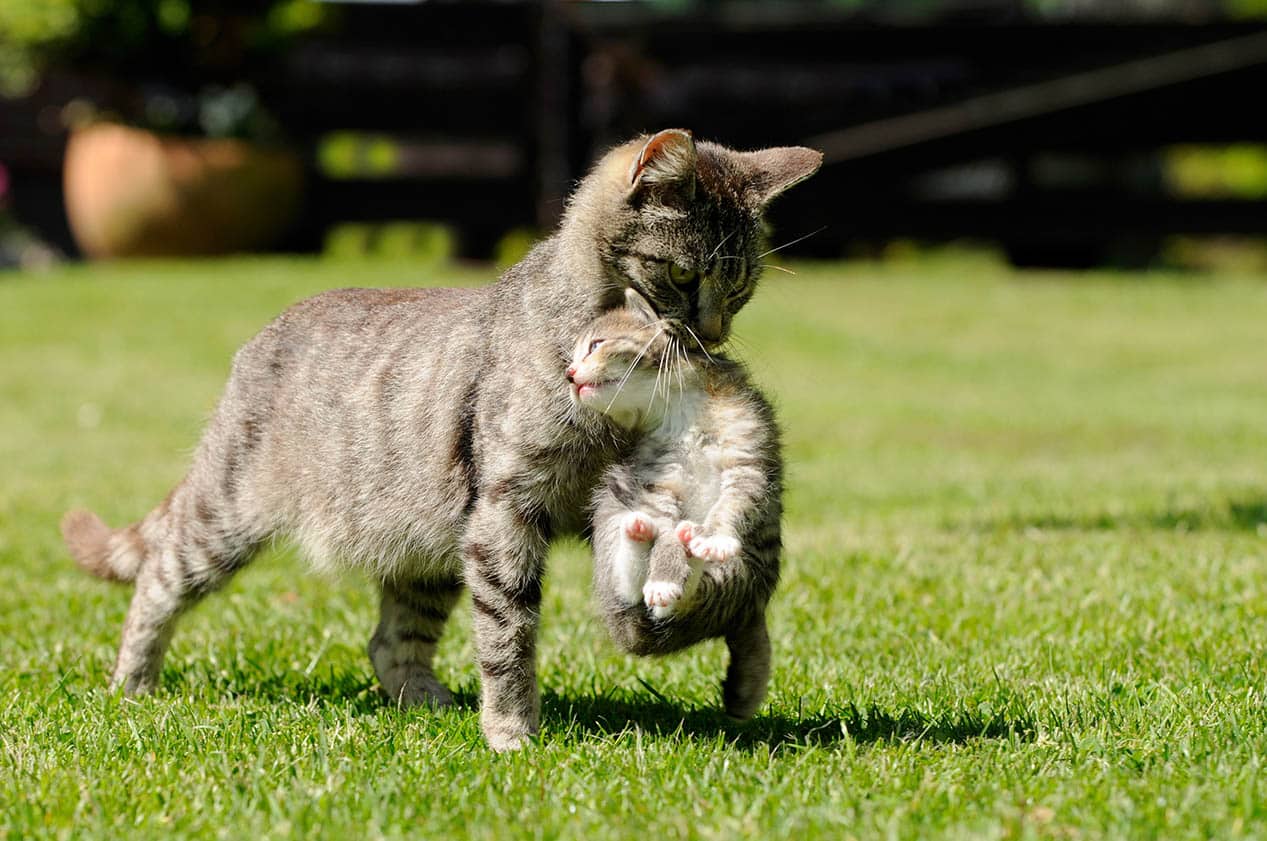
Image Source: www.catster.com
Fathoming Your Cat’s Maternal Instinct
At the core of why your cat moves her kittens lies her powerful maternal instinct. This innate drive compels her to protect and nurture her offspring. From the moment they are born, a mother cat’s primary focus is the survival and well-being of her litter. This instinct guides her actions, ensuring her kittens receive the best possible care in a safe environment. This includes finding the ideal spot for them to grow and develop without undue threat.
Interpreting Nesting Behavior
Nesting behavior is a crucial part of a cat’s reproductive cycle. Before giving birth, a pregnant cat will seek out a safe, quiet, and warm place to create a den for her kittens. This area should offer shelter and a sense of security. Once the kittens are born, the mother cat will continue to groom, feed, and protect them in this chosen location. However, if this initial nesting site no longer meets her criteria for safety or comfort, she will initiate kitten relocation.
Deciphering the Signs of a Stressed Cat
A stressed cat is more likely to relocate her kittens. Stressors can come from various sources, including loud noises, frequent disturbances, unfamiliar people or pets, or even changes in routine. If a mother cat perceives her current environment as unsafe or chaotic, her instinct will be to move her vulnerable offspring to a place where she feels they will be better protected. It’s important to observe your cat for signs of stress, such as:
- Hiding more than usual
- Excessive vocalization (meowing, hissing)
- Changes in appetite
- Aggression or irritability
- Over-grooming or under-grooming
A new mother cat is particularly sensitive to her surroundings. Her focus is solely on her kittens, and any disruption to her perceived safety can trigger relocation.
Reasons for Kitten Relocation
There are numerous reasons why a mother cat might decide to move her kittens. These reasons are all linked to her inherent drive to ensure the survival of her litter.
Unsanitary Conditions
Cats are naturally clean animals, and this cleanliness extends to their offspring. If the initial nesting area becomes soiled or unsanitary conditions arise, the mother cat will feel compelled to move her kittens. This could be due to:
- Feces or urine buildup: If the litter box or surrounding area isn’t kept clean, or if the kittens accidentally soil their nest frequently, she might seek a cleaner spot.
- Moisture or dampness: A damp environment can lead to the growth of bacteria and mold, posing a health risk to delicate kittens. A mother cat will move them to a dry location.
- Presence of parasites: If the nesting area is infested with fleas or other parasites, she will move her kittens to a parasite-free location to protect them from bites and potential disease transmission.
Predator Threat
The most significant driver for kitten safety and relocation is a perceived predator threat. Even in a domestic environment, a cat might sense danger from:
- Other pets in the household: Dogs, or even other cats, might show too much interest in the kittens, causing the mother to feel threatened.
- Wild animals outside: If the nesting area is too close to an open window or door, or if the cat hears or smells wildlife, she may move her kittens to a more secure interior location.
- Humans: While most cats trust their owners, a mother cat can become very protective. If she feels that people are disturbing her kittens too much, or if there are too many unfamiliar people around, she may seek a more secluded spot.
Environmental Changes
Even subtle environmental changes can prompt a mother cat to relocate her kittens. These can include:
- Loud noises: Construction work, parties, or even loud appliances can be highly disruptive and frightening for a mother cat and her vulnerable kittens.
- Frequent disturbances: If people are constantly coming and going from the nesting area, or if the kittens are handled too often by too many people, the mother may feel her kittens are not safe or getting enough undisturbed rest.
- Changes in temperature or drafts: Cats are sensitive to temperature fluctuations. If the nesting spot becomes too cold, too hot, or experiences drafts, she will seek a more stable environment.
- New smells or substances: Strong cleaning products or new scents introduced into the nesting area can also be a deterrent.
Inadequate Nesting Site
Sometimes, the initial nesting site might seem perfect to us, but the mother cat might find it lacking. This could be due to:
- Lack of privacy: If the chosen spot isn’t secluded enough, she may move them to a more private location where she feels less exposed.
- Insufficient warmth or softness: While she might have initially chosen a spot, she might realize it doesn’t retain warmth well or isn’t as comfortable as she’d like for her developing kittens.
- Accessibility issues: If the location becomes difficult for her to access comfortably, or if she worries about her kittens being able to get to her, she may move them.
Kitten Weakness or Illness
While less common as a primary reason for moving the entire litter, a mother cat might, in some instances, move a weaker or sick kitten to a different location, sometimes even seeming to isolate it. This behavior is complex and can be interpreted in a few ways:
- Resource allocation: In the wild, this could be a survival mechanism to focus resources on the strongest kittens.
- Preventing spread of illness: She might be instinctively trying to prevent any illness from spreading to the rest of the litter.
- Potential for kitten abandonment: In rare, extreme cases, if a kitten is born with severe abnormalities or is not surviving, a mother cat might exhibit behavior that appears to be kitten abandonment. This is a difficult aspect of maternal instinct and survival that can be heartbreaking to witness. However, it is important to remember that this is an instinctual response, not a deliberate act of cruelty.
Helping Your Cat Through Relocation
When you notice your cat moving her kittens, the best approach is to provide her with a safe and supportive environment.
Providing Ideal Nesting Options
To minimize the need for relocation, it’s best to prepare a safe nesting spot before your cat gives birth. This can include:
- A quiet, low-traffic area: Choose a room or corner that is out of the way of daily household activity.
- A sturdy, enclosed box: A cardboard box with high sides is ideal. You can cut a small entrance for the mother.
- Soft, absorbent bedding: Use old towels, blankets, or shredded paper that can be easily cleaned or replaced.
- Warmth: Ensure the area is draft-free and at a comfortable temperature. A safe heating pad designed for pets can be beneficial, especially in cooler environments.
- Privacy: Avoid overcrowding the area with too many people or other pets.
Observing from a Distance
Once kittens are born, it’s crucial to give the mother cat space. Limit your interactions to essential tasks like cleaning the immediate area (if necessary and done discreetly) and providing fresh food and water. Avoid:
- Picking up kittens unnecessarily: Handle kittens only when absolutely necessary, and do so quickly and gently, ensuring the mother is not present or agitated.
- Loud noises or sudden movements: Be mindful of your activity level around the nesting area.
- Allowing other pets or children to disturb them: Supervise all interactions closely.
What to Do If Relocation Occurs
If your cat does move her kittens, observe the new location. Is it safer? Is it cleaner? Is it more secure? Your goal is to support her decision rather than interfere unless there’s a clear danger.
- Do not try to move the kittens back: This can stress the mother and cause her to move them again, potentially to a less safe location out of panic.
- Ensure the new location is safe and accessible: If she moves them to a cupboard or a high shelf, make sure it’s not a place where they could get trapped or fall.
- Continue to provide food and water for the mother: A nursing mother needs plenty of nutrition and hydration.
Common Scenarios of Kitten Relocation
Here are some common situations that might lead a cat to move her kittens:
| Situation | Likely Cause | What to Do |
|---|---|---|
| Moving from a cardboard box | Felt the box was too open, too noisy, or the bedding became soiled. | Provide a more enclosed, quiet, and clean space nearby. Ensure bedding is fresh. |
| Moving from a laundry basket | Perceived it as too exposed or too accessible to other pets/people. | Offer a covered bed or a more secluded corner. |
| Moving from under a bed | The area under the bed became too disturbed, dusty, or offered poor insulation. | Prepare a quiet, enclosed box with warm bedding in a less disturbed area. |
| Moving from a busy room | Felt the constant traffic and noise were a threat to the kittens. | Ensure the initial nesting area was as quiet as possible. If she moves them to a quieter spot, leave them undisturbed. |
| Moving kittens one by one | This can be normal, especially if she is cleaning them or checking their welfare. It can also indicate distress. | Monitor the situation. If it’s consistent and the kittens seem distressed, evaluate the nesting environment for any stressors. |
| Moving to a seemingly unsafe spot (e.g., closet shelf) | She may perceive this as safer due to its enclosure and seclusion, even if it seems impractical to you. | Ensure the spot is truly safe and she can easily access it. If it’s a dangerous spot, try to offer a better alternative without forcing her. |
When to Seek Professional Help
While kitten relocation is usually a normal maternal behavior, there are times when you should consult a veterinarian or a cat behaviorist.
- If the mother cat seems overly aggressive or neglectful: If she appears to be actively harming her kittens or completely ignoring them, this is a serious concern.
- If the kittens are not gaining weight or seem lethargic: This could indicate issues with feeding or maternal care.
- If the mother cat exhibits signs of illness: Lethargy, loss of appetite, or discharge can signal an underlying health problem affecting her ability to care for her kittens.
- If the relocation persists and the kittens are exposed to extreme temperatures or hazards: If you cannot provide a safe and suitable alternative that the mother accepts, professional advice is needed.
- If you suspect kitten abandonment: In rare cases, a mother cat may abandon her litter. If this happens, you will need to intervene and seek help to hand-raise the kittens.
Conclusion: Supporting Your Feline Mother
Witnessing your cat move her kittens can be a fascinating glimpse into the powerful force of maternal instinct. It is a natural, albeit sometimes inconvenient, part of her role as a mother. By providing a safe, clean, and quiet environment, and by respecting her need for privacy, you can help your new mother cat feel secure and confident in her ability to raise her precious litter. Remember, her actions are driven by a deep-seated desire for kitten safety and well-being. With a little observation and support, you can ensure this crucial period of her life is as smooth as possible for both mother and kittens.
Frequently Asked Questions (FAQ)
Q1: Is it normal for a cat to move her kittens multiple times?
A: Yes, it can be normal for a cat to move her kittens multiple times, especially in the first few days or weeks. She might be testing different locations to find the absolutely perfect spot for her litter, or she might be reacting to subtle changes in her environment that you might not notice.
Q2: Can I prevent my cat from moving her kittens?
A: While you can’t entirely prevent it, you can significantly reduce the likelihood of relocation by preparing an ideal nesting site before she gives birth. This includes a quiet, safe, enclosed space with comfortable bedding. Once kittens are born, minimize disturbances to the nesting area.
Q3: My cat moved her kittens to a really inconvenient place. What should I do?
A: It’s best to accept her choice if the new location is safe. Trying to force her to move them back can cause more stress and may lead to further, potentially less safe, relocations. Instead, try to make the inconvenient spot as comfortable as possible by providing fresh bedding nearby and ensuring she has easy access to food and water. If the location is truly hazardous, try gently placing a more appealing, safer option nearby, but do not move the kittens yourself unless absolutely necessary and with guidance from a vet.
Q4: My cat seems to be abandoning one of her kittens by moving it separately. Is this normal?
A: While rare, this can happen. It’s often an instinctual response to a kitten that is weak, ill, or not thriving. It’s important to monitor the situation closely. If the kitten is left truly alone and seems neglected, you may need to intervene by providing supplemental warmth and feeding, and consult a veterinarian immediately.
Q5: How long does a mother cat usually keep her kittens in one spot?
A: A mother cat will typically stay with her kittens in the same nesting spot for the first few weeks of their lives, as long as she feels the environment is safe and meets their needs. Relocation usually happens when she perceives a threat or inadequacy in the current location. As the kittens grow and become more mobile (around 3-4 weeks), they may start exploring more, and the mother may be less inclined to move them unless necessary.